
A high-volume global electronics manufacturer required a compact, corrosion-resistant lift station solution to manage acidic and chemically aggressive process wastewater generated from multiple wet-process lines. The system needed to eliminate overflow events, stabilize pump cycling, reduce corrosion-related maintenance, and support around-the-clock operation while providing automated level monitoring and alarm notification across a standardized design suitable for deployment in up to 63 locations. Burt Process was selected to provide a factory-standardized lift station platform engineered for chemical compatibility, operational reliability, and long-term scalability across the facility.

Industry
Printed Circuit Board & Microelectronics

Challenge
Chemical Wastewater Collection & Transfer

Solution
Standard LS Simplex Lift Station
Challenges
- Overflow events during peak production
- Unpredictable pump cycling
- Elevated maintenance due to corroded metallic components
- Safety concerns associated with manual intervention
Goals
- Improving wastewater transfer reliability
- Eliminating chemical compatibility issues
- Reducing downtime
- Standardizing station design for long-term maintainability
- Integrating automated level monitoring and alarm notification
- Separate operational pump-on/off float controls
- High-level and high-high emergency alarms
- Low-level protection to prevent dry-run conditions
- Integration with an existing industrial automation network
- Reduce spare part stock
- Train maintenance crews once on a single standardized system
- Simplify replacement and lifecycle management
Delivered Solution: Burt Process Standard LS Simplex Pump Station
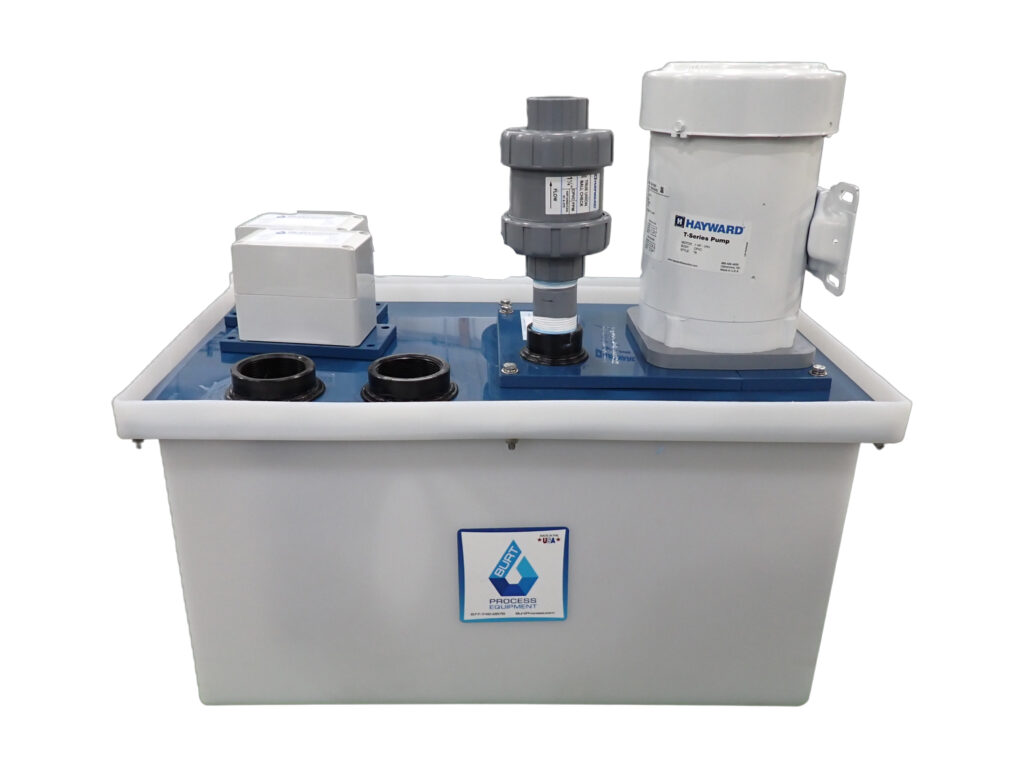
Burt Process supplied the PES-156-S Simplex Pump Station, selected for its industrial durability, chemical resistance, and modular standardization.
Equipment Summary
Polyethylene Basin Assembly
- 15-gallon molded polyethylene tank (24″ × 12″ × 12″D nominal dimensions)
- ½” thick polypropylene bolt-down cover for containment integrity
- Two 2″ FNPT vent and inlet ports with downpipe for splash control
Centrifugal Transfer Pump
- Vertical centrifugal pump with CPVC wetted surfaces
- 25 GPM @ 30′ TDH performance rating
- 1 HP TEFC single-phase motor
- Vertical CPVC ball-check valve for backflow prevention
LSF Series Multi-Point Float Level Controls
Two float assemblies provide redundant and independent control points (constructed from PP/CPVC to ensure full chemical compatibility), including:
- Pump Off / Pump On
- High-Level Alarm
- High-High Emergency Alarm
- Low-Level Alarm
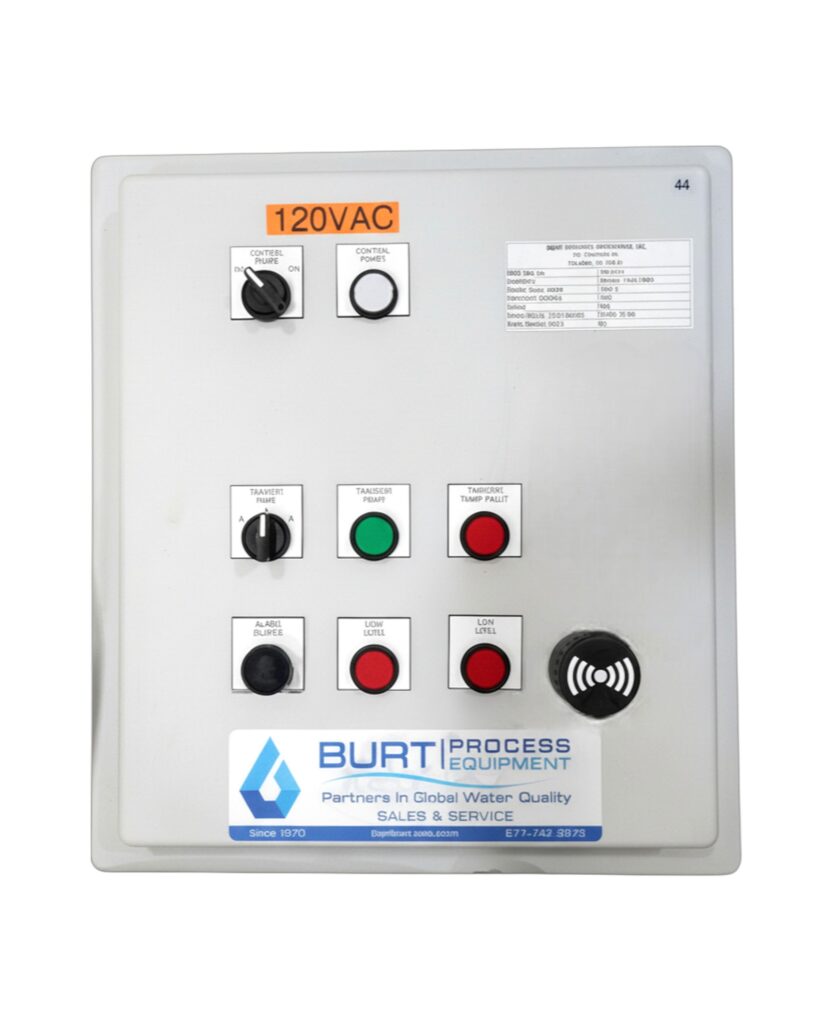
NEMA 4X Control Panel
- UL-labeled, 120 VAC
- Pump HOA selector, run & fault lights
- Alarm horn with silence/reset
- High-high and low-level alarm indicators
- Industrial-grade PLC (Siemens S7-1200) for integration and logic control
Implementation Strategy
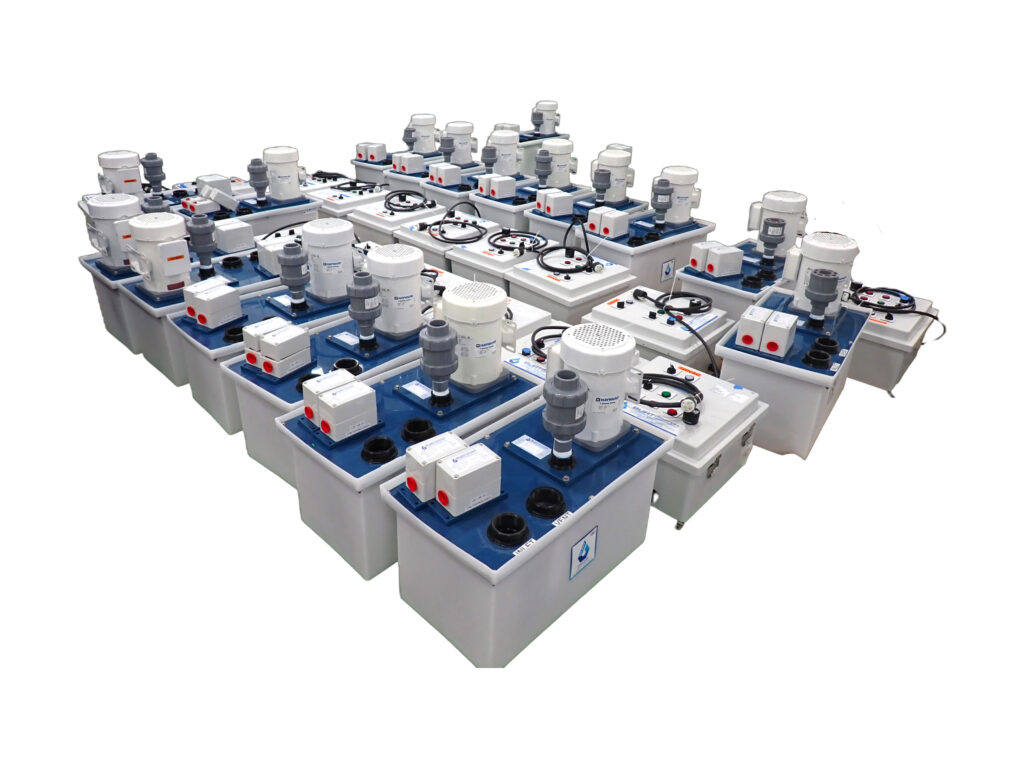
The manufacturer planned a multi-phase installation to match facility expansion. Six units were initially ordered for one process line, with an intent to scale to 63 total lift stations.
Installation Steps:
- Mechanical Integration: Units were skid-mounted and placed adjacent to existing trench drains and process discharge points.
- Electrical/Data Integration: Control panels tied into the facility’s SCADA for remote monitoring.
- Startup & Commissioning: Float levels calibrated, pump cycles optimized, alarms tested under simulated conditions.
- Training: Maintenance teams trained on simple component replacement and troubleshooting.
Results & Performance Outcomes
Reliable Transfer of Aggressive Waste Streams
CPVC and polypropylene components proved fully compatible with the facility’s chemical profile, eliminating corrosion-related failures commonly seen in previous metal-based systems.
Standardized Platform for Plant-Wide Expansion
A uniform lift station design allowed maintenance, purchasing, and safety teams to adopt a single standard across all facility departments.
Predictive & Preventive Monitoring
The dual alarm and PLC-based control architecture reduced unplanned downtime by allowing operations to react before overflow events occurred.
Reduced Operational Costs
- Lower spare part inventory
- Faster troubleshooting
- Longer lifecycle of non-metallic components
Improved Environmental and Safety Compliance
The sealed basin and bolt-down cover minimized chemical vapor exposure and supported EPA/OSHA compliance for chemical handling areas.
Long-Term Impact
The success of the initial deployment led the manufacturer to adopt the Burt Process Standard LS System as a facility-wide standard. The units are now integral to:
- PCB plating lines
- Resist stripping processes
- Waste neutralization staging
- High-purity rinse collection loops
The customer’s engineering, EH&S, and procurement teams all recommended expanding use due to the system’s reliability and ease of integration into future automation upgrades.
Conclusion
This case study illustrates how a standardized Burt Process Simplex Lift Station solution can dramatically improve reliability, safety, and operational efficiency in a high-volume electronics manufacturing environment. With complete chemical compatibility, robust automation, and modular scaling, the LS Series meets the demands of both current operations and long-term facility growth.
Do you have a similar application?